Side effects & Port-a-Cath
Since all of our treatments are experimental, it’s not always clear what dosing will make Juliette’s blood counts hit their lowest point, known as the nadir, or when physical symptoms will appear. When she reaches this low point this can lead to a number of side effects including internal and digestive tract bleeding, high risk of infection, fatigue etc.
In April, we paired Juliette’s photon radiation with a PARP inhibitor, Niraparib which can be a bit tougher on the body. Since she was initially tolerating Niraparib on a three days a week schedule, we decided to increase her dose to five days per week. After a full week of Niraparib Juliette hit her nadir. Juliette’s platelets and lymphocytes dropped significantly requiring a platelet and pentamidine transfusion/infusion.
With the need for frequent labs and the risk of transfusions, it was becoming more and more difficult to draw blood and place IV’s for Juliette to receive treatment.
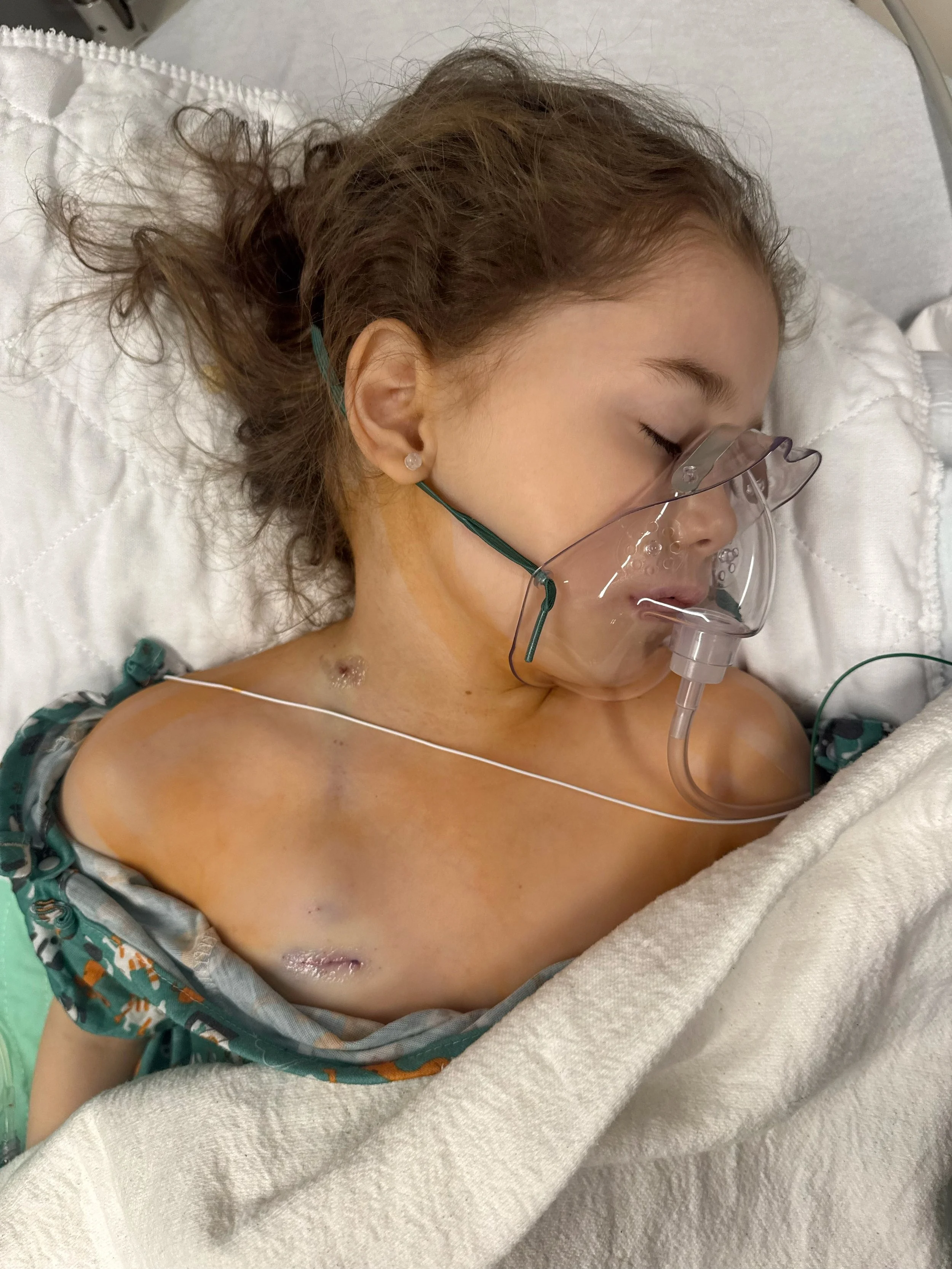
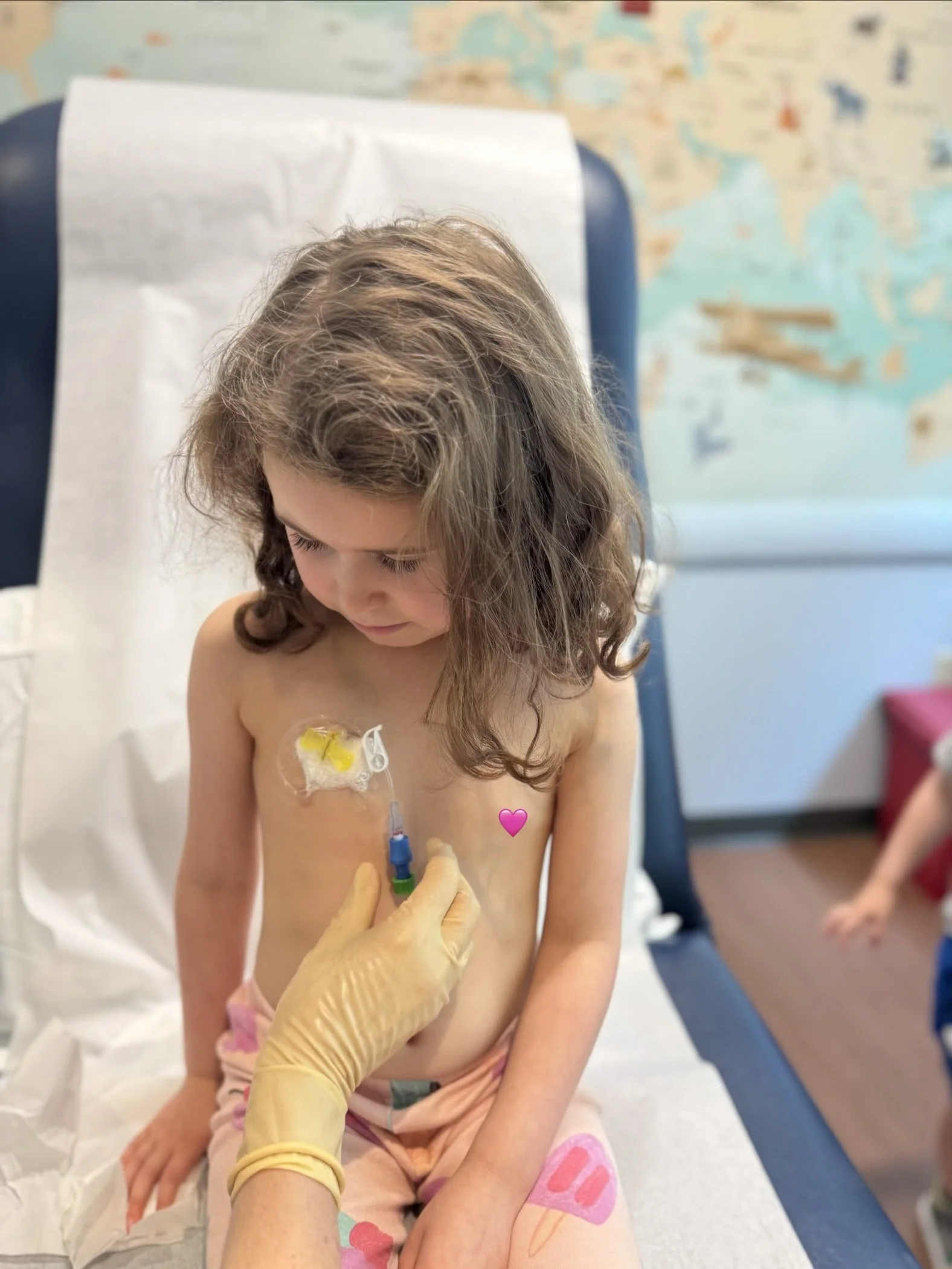
Two weeks ago, Juliette underwent a procedure to have a port-a-cath placed. We call it her "button." A port is a small device implanted under the skin that connects to a catheter in a large vein. It allows her care team to administer immunotherapy intravenously, as well as draw blood, without repeated pokes.
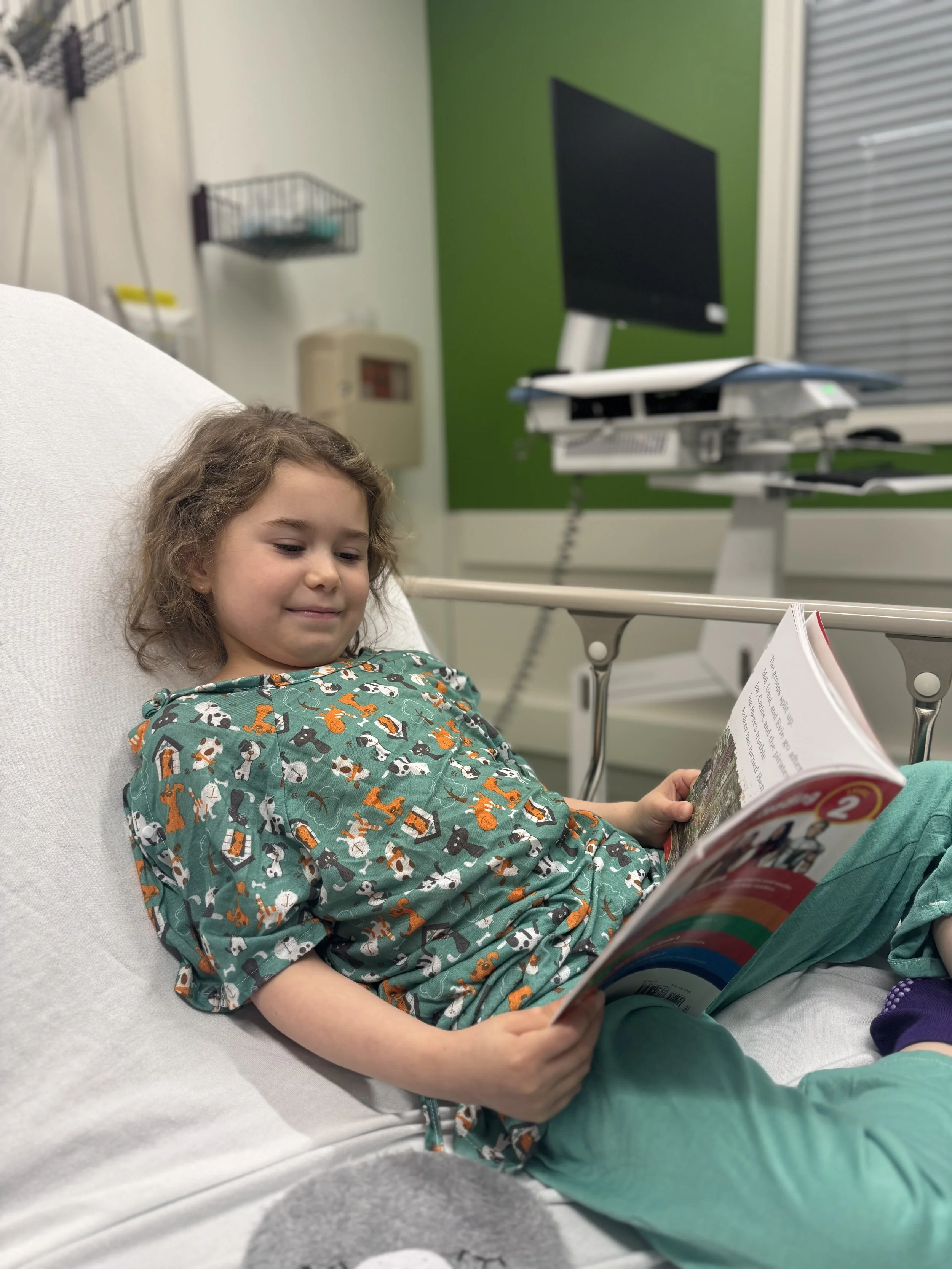
While she’s had a few restrictions for the past two weeks as she’s healing, she’s doing great and looking forward to her first elementary school summer!